
A common misconception in DeFi is that a wallet is secure if it can show a transaction simulation, or that a multi-chain wallet is inherently safer because it puts every network in one interface. Neither assumption is reliable. Simulation is a powerful form of transaction preview, but it is not a guarantee of what will happen later. A multi-chain wallet can reduce friction, yet it can also make a user’s risk surface wider by bringing unfamiliar networks, tokens, bridges, and approval systems into the same workflow. The practical question is not whether a wallet offers one impressive security feature. It is whether the wallet helps you understand what your signing action authorizes, under the conditions that actually matter.
That distinction matters especially for US-based DeFi users, who may move between Ethereum, layer-2 networks, and other EVM-compatible chains while managing assets across decentralized exchanges, lending markets, liquid staking protocols, and NFT applications. A good security model must therefore combine technical inspection with human judgment. Transaction simulation can improve that model, but only when users understand its scope and its blind spots.
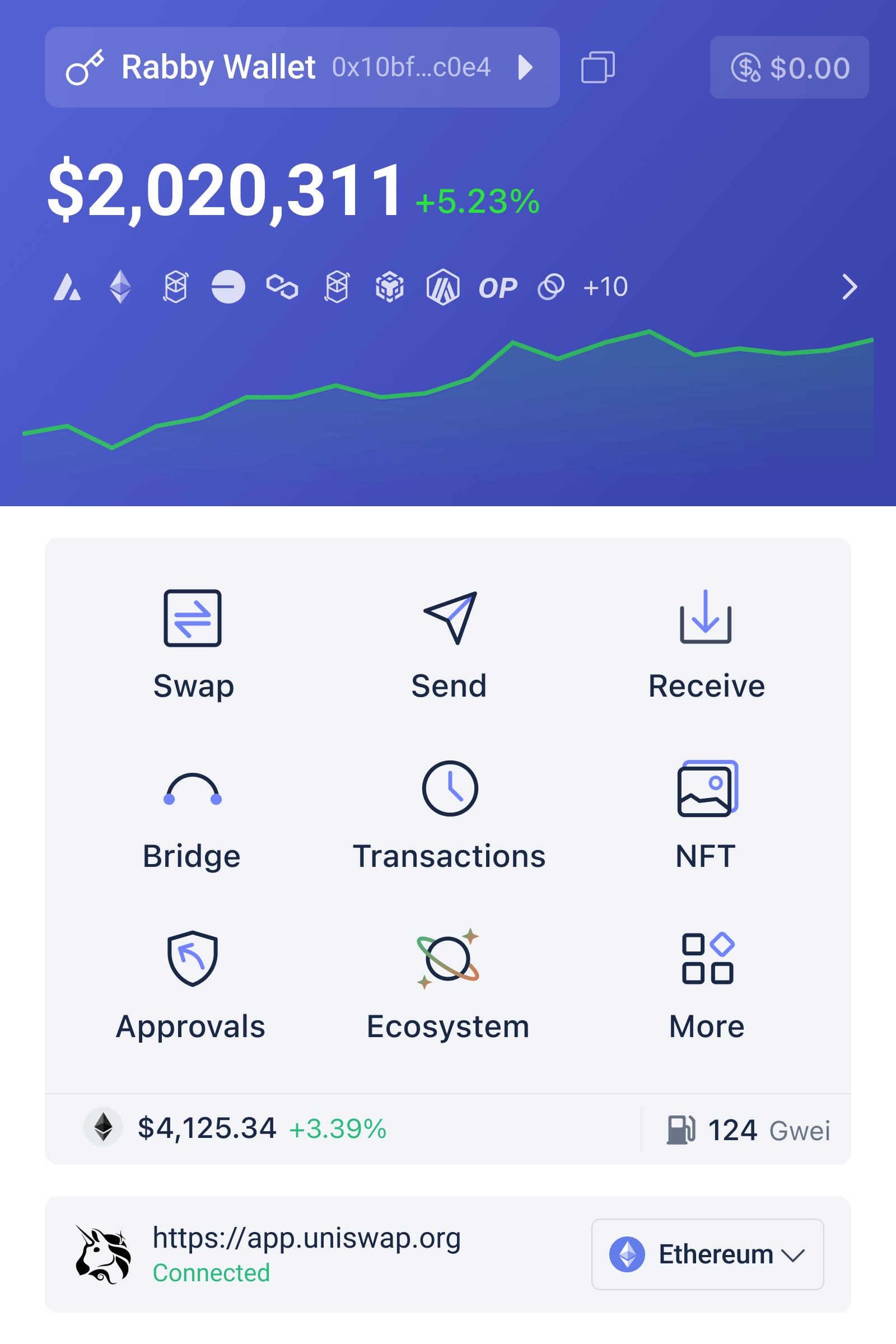
Myth: A successful simulation means the transaction is safe
Transaction simulation generally means executing a proposed blockchain transaction in a controlled environment before broadcasting it. The wallet or an associated service estimates how the call would affect balances, permissions, contract state, and other relevant outputs. Instead of seeing only a technical instruction such as a contract address and function name, the user may receive a more intelligible preview: tokens sent, tokens received, approvals granted, or an unexpected change in account holdings.
This is a major improvement over blind signing. Smart-contract transactions are composable: one click in a decentralized application can trigger several internal calls, interact with a token contract, and change permissions that remain active after the immediate trade is finished. A simulation can expose effects that are not obvious from the application’s button label. In that sense, it serves as a translation layer between machine-readable execution and human-readable decision-making.
But “the transaction would do this in the simulation” is not the same statement as “the transaction will be safe.” The simulation depends on the state it examines, the environment in which it runs, and the assumptions made by the analysis system. Blockchain state can change between simulation and inclusion. A token’s price can move. A lending position can cross a liquidation threshold. A protocol can update its configuration. A malicious application can present one transaction for inspection and later ask for another approval or signature.
The most important boundary is time. Simulation is a snapshot-based forecast, not an immutable contract with the future. The closer the simulated state is to the state at execution, the more informative the result may be, but no preview eliminates the possibility of state changes, network reordering, failed assumptions, or unusual contract behavior. This is particularly relevant during volatile market conditions, when a transaction that looked economically reasonable seconds earlier may become costly or harmful.
Myth: Transaction simulation replaces careful signing
A simulation should be treated as one layer in a defense system, not as a substitute for verifying context. Before signing, a user still needs to ask: Is this the application I intended to use? Is the network correct? Is the contract address plausible? Am I swapping, depositing, borrowing, bridging, or merely granting an approval? Does the requested spending allowance match the task?
Approvals deserve special attention because they create a different kind of risk from a one-time transfer. When a token allowance authorizes a contract to spend assets on your behalf, the immediate transaction may transfer nothing. The dangerous consequence can appear later if the approved contract is compromised, upgraded, incorrectly configured, or simply more powerful than the user understood. A simulation that displays “approval granted” is useful, but the user must still decide whether the allowance is necessary and whether its scope is proportionate.
This leads to a sharper mental model: review the transaction as a change in authority, not merely a movement of money. A swap changes assets. A deposit changes a claim against a protocol. A permit or approval may change who can act for your wallet. A signature may also authorize an off-chain message that is not immediately broadcast but can later be submitted by another party. Security improves when the user identifies the authority being created or transferred in each step.
For people installing a browser wallet, the setup process is part of this security model. The safest practical starting point is to obtain the extension from a source you independently verify, then confirm the wallet’s permissions, connected sites, and active network before importing or creating an account. Readers comparing installation steps can use this rabby extension download resource as a starting point, while still checking that the extension, domain, and installation prompts match expectations. No wallet interface can compensate for a fake download page or a seed phrase entered into a website.
Myth: A multi-chain wallet creates one unified risk environment
A multi-chain wallet is best understood as a common control surface, not as a single blockchain account with identical conditions everywhere. Many networks use compatible account formats, but they can differ in consensus assumptions, fee tokens, bridge dependencies, RPC infrastructure, finality behavior, contract standards, and application quality. The same address appearing on several chains does not make the chains interchangeable.
That creates a trade-off. A unified interface reduces the cognitive and operational cost of switching networks. It can help users see where a transaction is directed and reduce the chance of sending an asset under the wrong chain assumption. At the same time, convenience may encourage users to treat unfamiliar networks as if they had the same security profile as a mature network. They do not necessarily have the same validator economics, liquidity depth, monitoring quality, or recovery options.
Bridges illustrate the problem clearly. Moving an asset between chains is not simply changing a dropdown menu. It may involve custodial or semi-custodial components, message verification, wrapped representations, liquidity pools, or contracts that hold large amounts of value. A multi-chain wallet can make the interaction easier to initiate, but it does not remove the underlying bridge risk. Simulation may show the expected asset flow while leaving broader questions—such as who controls a bridge component or what happens during an outage—outside its scope.
Network confusion is another practical hazard. A user may see a familiar token symbol on a different chain and assume it has the same issuer, liquidity, or redemption properties. Token symbols are not unique identities. Contract addresses and network context matter. In a multi-chain workflow, the right habit is to verify the chain, token contract, destination address, fee asset, and expected result together rather than relying on the asset’s name or logo.
What simulation can reveal—and what it cannot
Simulation is strongest when it answers concrete questions about execution. Will the call revert? Which assets are expected to leave the wallet? Which assets should arrive? Is an approval being created? Does the transaction appear to interact with a contract different from the one the application described? These checks can catch ambiguous or malicious behavior before a signature is committed.
It is weaker when the risk is not fully represented by the immediate state transition. Economic loss from slippage, oracle manipulation, impermanent loss, protocol insolvency, governance decisions, and smart-contract bugs may not appear as a simple unauthorized transfer. A transaction can execute exactly as simulated and still produce a poor outcome because the user accepted an unfavorable price or deposited into a system with risks that execution previews do not measure.
There is also an information problem. A wallet can present a readable interpretation, but interpretation itself depends on available contract metadata and the ability to classify complex calls. Novel protocols, proxy contracts, unusual token behavior, and nested interactions can be difficult to summarize perfectly. A warning should prompt investigation, but the absence of a warning should not be interpreted as proof of legitimacy.
A reusable decision rule is to separate three questions. First, execution: what will the blockchain call likely do? Second, authorization: what new permissions will I grant, and for how long? Third, economic exposure: what could I lose if the protocol, market, bridge, or counterparty behaves badly? Transaction simulation primarily helps with the first question and can support the second. The third still requires protocol research, position sizing, and an understanding of market structure.
How to use a wallet’s security signals in practice
Before approving a routine swap, compare the simulated inputs and outputs with your intention. Check the network and fee, inspect the recipient or contract, and look for unexpected approvals or asset movements. If the result is difficult to interpret, pause rather than treating complexity as normal. DeFi composability is useful, but complexity also increases the number of assumptions that must hold.
For a new protocol, use a smaller test transaction when practical. Consider limiting an allowance instead of granting unlimited spending authority, and review connected sites periodically. Keep long-term holdings separated from the account used for experimental applications. Hardware signing can protect private keys from some software threats, but it does not make an intentionally approved malicious transaction safe; the signer can still authorize the wrong action.
Users should also distinguish wallet security from account recovery. A wallet may help identify suspicious transactions, while the security of the seed phrase still depends on how it is generated, stored, and protected. No legitimate support process should require a seed phrase or private key. If a browser extension, website, or person requests that information, the correct response is to stop.
There is no recent project-specific news supplied here that changes these fundamental mechanics, so the more durable signal is the direction of wallet design: better interfaces are increasingly expected to explain contract behavior rather than merely display gas fees. If that trend continues, the useful question will not be whether a wallet has “AI,” warnings, or simulations as labels. It will be whether its explanations are accurate, timely, understandable, and connected to the actual decision a user must make.
FAQ: Transaction simulation and multi-chain wallet security
Can transaction simulation detect every crypto scam?
No. It can reveal many unexpected execution effects, such as unauthorized transfers, unfamiliar approvals, or a transaction that is likely to fail. It may not identify a legitimate-looking contract with harmful economics, a compromised protocol, a fake website, or a future state change. Treat it as a risk signal and preview, not a complete audit.
Is a multi-chain wallet less secure than separate wallets?
Not automatically. A multi-chain wallet can improve visibility and reduce network-switching mistakes, but it also exposes users to more applications and chain-specific risks through one interface. Security depends on account separation, careful network verification, approval management, and the quality of the applications being used.
What is the most useful thing to check before signing?
Start with the authority change: identify what leaves the wallet, what arrives, and which contract or account gains permission to act. Then verify that the network, application, allowance, and economic exposure match your intention. If any part cannot be explained clearly, do not sign until it can.
The central correction is simple but consequential: secure wallet use is not about finding a single perfect warning system. It is about combining transaction previews, permission awareness, network context, and disciplined skepticism. Simulation can make hidden behavior visible. It cannot make judgment unnecessary.